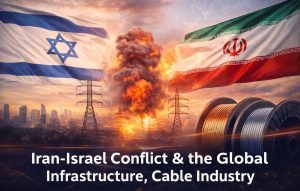

Geopolitical conflicts rarely remain limited to political boundaries. They often ripple across global supply chains, energy markets, and infrastructure sectors. The ongoing tensions and military confrontation between Iran and Israel are already creating uncertainty across global energy and industrial markets.
For industries closely linked to infrastructure development — including electrical cables, power transmission, and manufacturing — geopolitical disruptions can influence raw material prices, project timelines, and long-term infrastructure investments.
Understanding these impacts is important for businesses operating in sectors such as power infrastructure, construction, and electrical manufacturing.
Why the Middle East Conflict Matters to Global Industry
The Middle East plays a crucial role in global energy supply. A major concern during the Iran–Israel conflict is the security of the Strait of Hormuz, one of the world’s most critical energy trade routes.
Nearly 20% of the world’s oil supply passes through the Strait of Hormuz, making it a strategic chokepoint for global energy markets. 
Recent disruptions in the region have already caused volatility in energy markets, with oil prices rising by around 10–13% and crossing $80 per barrel, with analysts warning prices could reach $100 if disruptions continue. 
Higher energy costs directly influence industries that rely heavily on power, transportation, and raw materials.
Impact on Energy Prices and Industrial Costs
Energy prices are a critical factor for industrial growth. Manufacturing facilities, power plants, and large infrastructure projects require stable and affordable energy supplies.
If geopolitical tensions disrupt energy supply chains, several effects may occur:
• Increased electricity generation costs
• Higher fuel costs for manufacturing and logistics
• Rising operational expenses for heavy industries
• Delays in infrastructure projects
Energy-intensive sectors such as steel, aluminum, cement, and electrical equipment manufacturing may experience increased production costs if oil and gas prices continue to rise.
These cost pressures often cascade across supply chains, affecting construction and infrastructure development globally.
Supply Chain Disruptions and Raw Material Volatility
The infrastructure and cable industry depends heavily on key industrial metals such as copper, aluminum, and steel.
Geopolitical conflicts can affect global shipping routes and commodity supply chains. When maritime routes or energy supply networks face disruptions, it can lead to:
• Increased shipping and logistics costs
• Delays in international cargo movement
• Higher insurance and freight costs
• Commodity price fluctuations
In recent developments, tanker traffic and shipping through strategic waterways have slowed significantly due to security concerns, with over 150 ships reportedly waiting near the Strait of Hormuz during the crisis. 
Such disruptions can create uncertainty in global commodity markets, including metals used extensively in electrical infrastructure.
Implications for the Electrical Cable and Power Infrastructure Sector
The cable and power infrastructure industry sits at the center of global industrial growth. Power transmission networks, renewable energy projects, and urban infrastructure rely heavily on high-quality electrical cables.
Rising energy prices and supply chain disruptions may impact the sector in several ways:
- Increased Raw Material Costs
Copper and aluminum are essential components in power cables. Price volatility in these metals can increase manufacturing costs.
- Infrastructure Investment Uncertainty
Geopolitical instability may slow investment decisions in large infrastructure projects, especially in energy and power transmission.
- Supply Chain Adjustments
Manufacturers may need to diversify sourcing strategies to ensure steady availability of materials.
- Energy Transition Challenges
Global energy transitions — including renewable power projects and EV infrastructure — require large-scale electrical networks. Rising energy costs could temporarily slow some investments.
Long-Term Perspective: Infrastructure Demand Will Continue to Grow
While geopolitical conflicts can create short-term market volatility, long-term global infrastructure demand remains strong.
Rapid urbanization, electrification, renewable energy expansion, and digital infrastructure growth are driving increasing electricity demand worldwide.
Governments across the world — including India — continue to invest heavily in:
• Power transmission networks
• Renewable energy infrastructure
• EV charging ecosystems
• Smart grid technologies
• Industrial manufacturing capacity
These trends indicate that reliable electrical infrastructure will remain critical for economic growth.
The Role of High-Quality Electrical Infrastructure
As the global economy becomes increasingly dependent on electricity, digital connectivity, and industrial manufacturing, reliable electrical infrastructure becomes more important than ever.
High-performance electrical cables, robust power transmission networks, and resilient energy systems will be essential in supporting infrastructure development and economic stability — even during periods of geopolitical uncertainty.
Conclusion
The Iran–Israel conflict highlights how geopolitical events can influence global industries far beyond the region itself. Energy markets, supply chains, and commodity prices can quickly react to geopolitical developments, affecting sectors ranging from manufacturing to infrastructure.
For the electrical cable and power infrastructure industry, staying resilient means adapting to changing market conditions while continuing to support the growing global demand for reliable power networks.
As infrastructure investments expand worldwide, strong electrical systems will remain a key foundation for sustainable economic growth.
According to the International Energy Agency, disruptions in key oil supply routes can significantly impact global energy markets and infrastructure investments. https://www.weforum.org/agenda/archive/geopolitics/