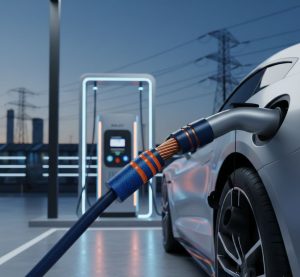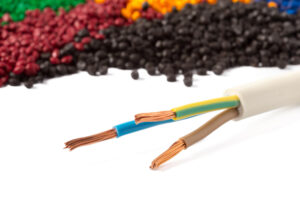

EV charging cable quality plays a critical role in the safety, speed, and reliability of modern electric vehicle charging infrastructure. While electric vehicles are transforming the way we move, the performance of an EV charger largely depends on the quality of the cable powering it.
The Growing Demand for EV Charging Infrastructure
In modern EV charging infrastructure, EV charging cable quality directly impacts safety, charging speed, and long-term reliability.
Currently, India’s EV ecosystem is expanding at an unprecedented pace. Public and private charging stations are being installed across highways, residential complexes, commercial buildings, and industrial zones.
These advancements place significant electrical and thermal stress on charging components, especially cables.
Modern EV chargers operate at:
• 400V to 800V systems
• High current loads ranging from 200A to 500A
• Extended charging durations
This creates a demanding environment where cable performance directly impacts safety, efficiency, and charging speed.
Why EV Charging Cables Face Quality Matters Under Extreme Electrical Stress
Unlike conventional household wiring, EV charging cables are subjected to:
• Continuous high current flow
• Rapid heat generation
• Voltage fluctuations
• Outdoor exposure (heat, moisture, dust)
Even a 1–2% increase in electrical resistance can lead to excessive heat buildup, energy loss, and premature cable degradation. Over time, this not only affects charging efficiency but also increases the risk of insulation failure and safety hazards.
The Importance of High-Conductivity Copper
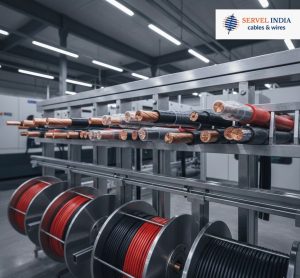
Copper conductors play a vital role in EV cable performance. High-purity copper ensures:
• Lower resistance
• Efficient current transmission
• Reduced heat generation
• Improved energy efficiency
Uniform conductor stranding further enhances flexibility and durability, which is crucial for EV cables that experience repeated thermal cycles and mechanical stress.
Insulation Quality: A Key Safety Factor
Insulation is the protective layer that separates electrical energy from its surroundings. In EV applications, insulation must:
• Withstand high temperatures
• Resist thermal aging
• Prevent electrical leakage
• Maintain structural integrity over time
Flame-retardant insulation materials are especially important in EV charging systems, as they help limit fire propagation and provide critical response time in case of faults.
Thermal Management and Cable Longevity
Heat is one of the biggest challenges in EV charging infrastructure. Continuous charging cycles can raise cable temperatures significantly. Poor thermal performance can:
• Reduce cable lifespan by 15–25%
• Increase maintenance costs
• Lead to system downtime
Cables designed with proper insulation thickness, conductor design, and heat-resistant materials ensure stable performance even under sustained load conditions.
Safety and Compliance in EV Installations
EV charging systems must comply with strict electrical safety standards. However, compliance alone is not enough. Real-world operating conditions demand cables that are:
• Tested under continuous load conditions
• Designed for long-term reliability
• Suitable for both indoor and outdoor installations
Using substandard cables may reduce upfront costs, but it significantly increases long-term risks and operational expenses.
Why Cable Quality Directly Impacts EV Adoption
Reliable charging infrastructure builds consumer confidence in electric mobility. Frequent charger failures, overheating issues, or safety incidents can slow down EV adoption and increase infrastructure costs.
High-quality cables contribute to:
• Faster and more efficient charging
• Reduced energy losses
• Enhanced safety
• Lower lifecycle costs
In essence, the success of EV infrastructure depends on the reliability of the cables powering it.
Conclusion
As electric mobility continues to grow, EV charging infrastructure must evolve with it. While chargers and vehicles often take center stage, cables and wires form the foundation that makes reliable charging possible.
Investing in high-quality, well-engineered cables is not just a technical choice it is a commitment to safety, efficiency, and the future of sustainable mobility.
At Servel India, we believe that strong infrastructure begins with strong connections designed to power tomorrow’s mobility, today.